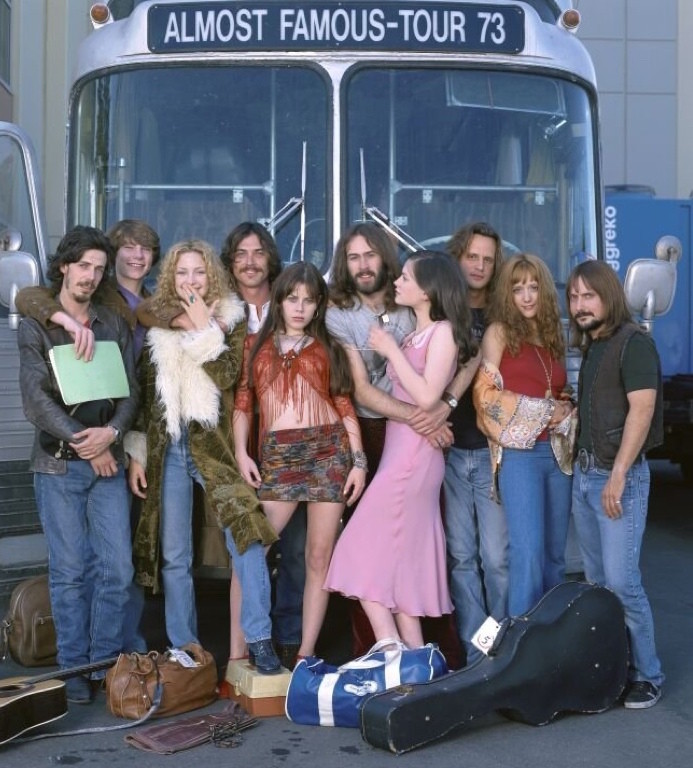
One of the greatest joys in life (or at least in my life) is discovering a cult film that you’ve somehow never come across before. If you’ve seen Almost Famous (2000), then you can imagine what I’m about to say. If you haven’t – stay with me and I’ll convince you to watch it, I promise.
I’m ashamed to admit that I have a vast list in my phone of films that I haven’t-but-really-should-have seen, and for the last few months I’ve been making my way through them. Having never really heard of it, Almost Famous was suddenly presented to me by the universe multiple times in the same week. It started showing up on my Sky box, and then I watched an Anya Taylor-Joy interview in which she confesses a particular scene from the film is one of her favourites. It was like the film itself was begging me to add it to my list, and so I did. I coerced my brother into watching it with me that same weekend, and we spent the full two-hours-and-forty-two-minutes totally hooked on the screen.
Written and directed by Cameron Crowe, mastermind behind Fast Times at Ridgemont High (1982), this film is an experience from beginning to end. If you like a slow burn, this plot really spent its time laying the foundations. Set in the 1970s, we follow 15-year-old William Miller, a budding-journalist writing a piece for Rolling Stone Magazine, as he is swept along with the US tour of complicated rock band Stillwater. Arguably the star of the show, and cover girl of the film poster, is 19-year-old Kate Hudson in the role of Penny Lane – a groupie of the band (though she denies it). The sweet friendship between William and Penny Lane is contrasted with the fact that Penny Lane is in love with the lead singer of the band, Russell Hammond.
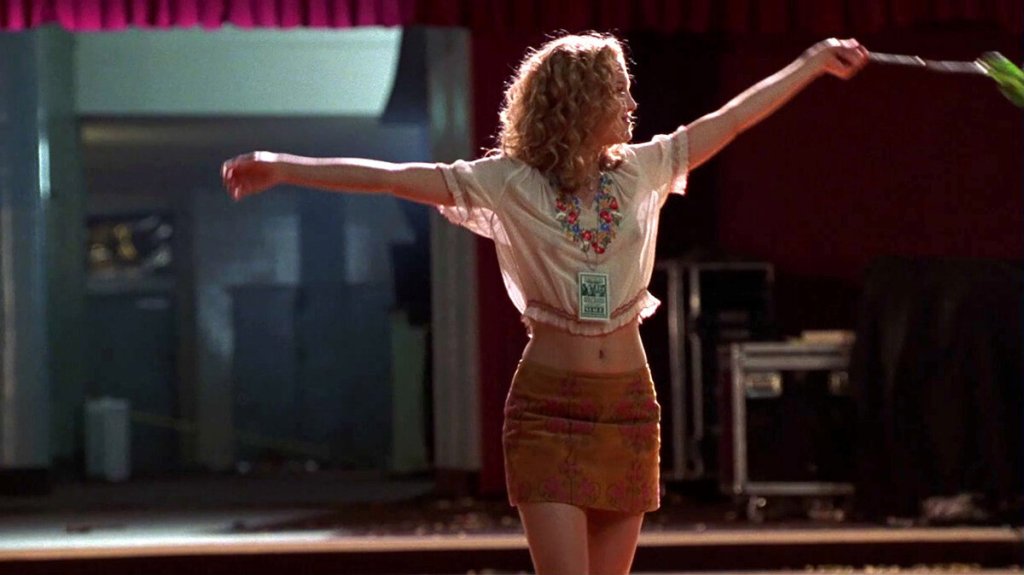
If you’re like me, then you probably spend your life romanticising every situation because of the films you’ve seen. Watching Almost Famous has left me with an overwhelming desire to travel around the states in a crowded tour bus, and wondering how I can possibly achieve this. There’s a word I love – Anemoia – which means to experience nostalgia for a time you’ve never known. The clothes, the music, and the non-bound freedom of this films paints the 70s with such vibrant colours that it’s hard not to envy the kids of that time. Of course, I know that’s exactly what Crowe aimed to replicate, but all I can say is he very much managed to do so.
There’s no doubt that the cast played a pivotal part in my enjoyment of Almost Famous, given that a young Billy Crudup is surprisingly attractive, and young Kate Hudson is an angel. It’s always impressive when a film can have a large cast and still have time to make you emotionally attached to all of them – even if some of their traits were unbearable. I laughed and cried, I ooh’d and ahh’d, and I rooted for them all. Jimmy Fallon manages to make an appearance, and Francis McDormand even stars as William’s mother!
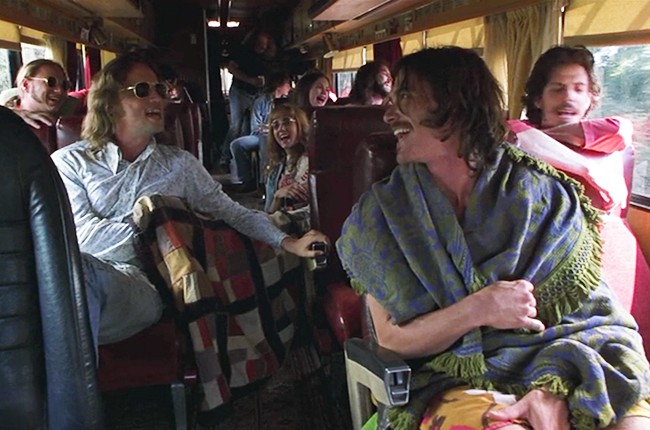
I think what struck me most about this film was that it focuses on the sense of being in the moment. The characters are not distracted by social media or mobile phones, they’re distracted by each other and the music around them. The narratives in this film are complicated, heartbreaking, and funny, but they also feel real (or as real as a cinematic world can be). We watch as the characters live in this messy fantasy, and then we watch as this fantasy collapses around them. It’s somewhat the very literal meaning of ‘sex, drugs & rock ‘n’ roll’, but its also a coming-of-age story about who we think we are when we’re young.
If I haven’t convinced you yet, this is my final attempt: If you like watching films that will make you feel inherently different afterwards (even if only for a day), watch Almost Famous and you won’t be disappointed.
 LILY BLUE